
 English
 فارسی
فارسی 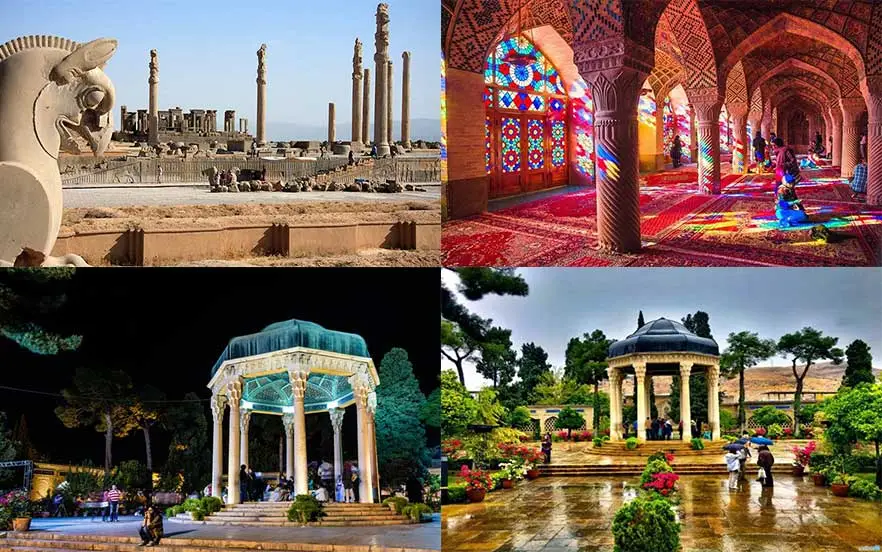

.Shiraz is one of the big cities of Iran, which has been able to introduce its level not only to Iranians but also to the world with its various features and attractions
The people of Shiraz are very warm and friendly, and the sweet accent of the people of this city will attract the attention of every tourist. The people of Shiraz are very kind and generally have good moral qualities. Life in this city has always been full of joy and there has never been any news of despair or sadness in Shiraz. In fact, upon entering the city of Shiraz, a good sense of happiness will be conveyed to tourists and the beauty of the city will be noticed by tourists
Culture and customs of Shiraz people
The people of this city attach great importance to events like Nowruz and perform various ancient rituals very carefully
The people of Shiraz are very warm and friendly, and the sweet accent of the people of this city will attract the attention of every tourist
The people of Shiraz are very kind and generally have good moral qualities
Tourist Attractions of Shiraz
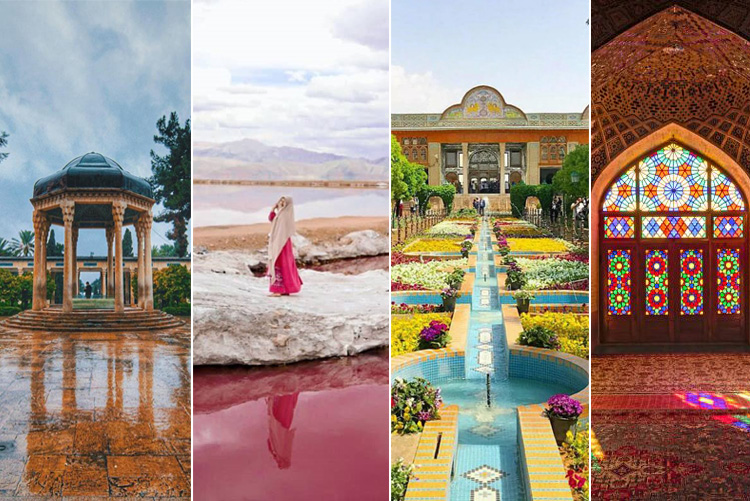
Hafezieh
Hafezieh or the Tomb of Hafez (opened: 856 AH – 1452 AD) is the burial place of Hafez Shirazi in Shiraz. This building was designed and renovated by order of Reza Shah, by Ali-Afsar Hekmat, the Minister of Education at the time, based on a plan by Andre Godard. The executor was Ali Riazi, the head of the Education Department of Fars, and his supervisor was Ali Sami
The tomb of Hafez and its surroundings were previously known as “Tekiyeh Hafez.” Hafeziyeh is located south of the Quran Gate on the northern edge of Shiraz and at the beginning of Golestan Street, which was previously known as “Kharabat Street.”


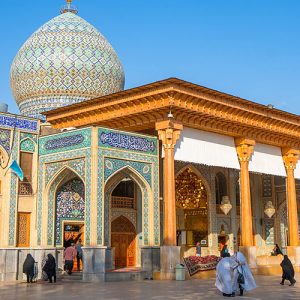
Shah Cheragh
The shrine of Ahmad ibn Musa, known as Shah Cheragh, is a sacred complex in the center of Shiraz. According to Shia beliefs, Ahmad ibn Musa, the eldest son of Musa Kazem, the seventh Imam of the Shia, as well as Muhammad ibn Musa, one of the brothers of Ali ibn Musa al-Ridha, are buried there. This shrine is considered the third most important shrine for Shia in Iran, after the shrines of Ali ibn Musa and Fatemeh Masoumeh.
Background
The Shah Cheragh shrine is the tomb of Ahmad ibn Musa, nicknamed Shah Cheragh, the eldest son of Musa Kazem, the seventh religious leader of the Shia.
The Supreme Council of the Cultural Revolution approved September 15, 2009, the sixth of Dhul-Qi’dah, as the day to commemorate Ahmad ibn Musa Shah Cheragh for inclusion in the national-Islamic calendar of the country.
Saadiyeh
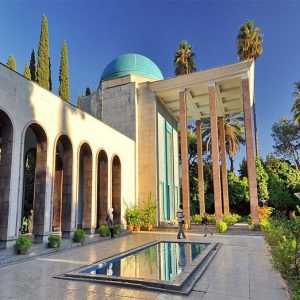
The tomb of Saadi, known as Saadiyeh, is the burial place of Saadi, the Persian-speaking poet. This monument was designed by Mohsen Faroughi
This tomb is located at the end of Boustan Street, next to Delgosha Garden, at the foothills of the mountain in the northeast of Shiraz
Eram Garden
Eram Garden is one of the tourist attractions in Shiraz and is considered a sample of a garden-pavilion. It is very popular among tourists due to its citrus trees and a long avenue lined with magnificent cypress trees on both sides. In addition to the main pavilion from the Qajar era, which forms the central core of this garden, the tall and ancient cypress trees have further enhanced its beauty. Eram Garden in Shiraz, with an area of over 110,380 square meters, was registered as a national heritage site on November 5, 1974.

Nasir al-Mulk Mosque
Nasir al-Mulk Mosque is one of the most beautiful mosques in Shiraz, dating back to the Qajar period. This mosque is located in an area that previously belonged to the Qavam family, and several historical artifacts from that era can be found there. Today, this beloved mosque, also known as the Pink Mosque, is considered one of the most popular tourist attractions in Fars province in Shiraz and has a great deal of popularity among both domestic and foreign tourists.Nasir al-Mulk Mosque was built at the order of Mirza Hassan Ali, known as Nasir al-Mulk, who was one of the prominent figures of the Qajar dynasty. The architecture of the mosque was carried out by Mohammad Hassan Memar. The construction of the building took about 12 years, from 1293 to 1305 in the Hijri Qamari calendar. The area of the mosque is 2212 square meters and its total area is 2980 square meters.


Shapouri Mansion
Shapouri Mansion is one of the most beautiful garden mansions in Shiraz and a sightseeing location in Fars Province. This mansion dates back to the Pahlavi era, and within it, one can observe a fusion of Iranian and European architecture. In this complex, the natural elements of the garden and the beautiful architecture of the building create a unique vista together. This garden mansion was registered as a national heritage site on October 8, 2000, with registration number 2781, and currently hosts the Shapouri café and restaura
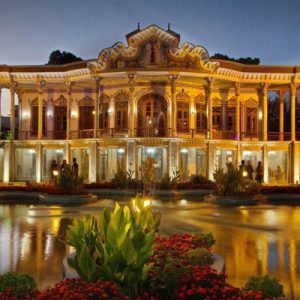
The Orange Garden of Qavam
The Qavam complex was built between 1257 and 1267 in the Persian calendar during the reign of Naser al-Din Shah Qajar, at the command of Ali Mohammad Khan Qavam. It consists of two parts: the outer section (the Orange Museum) and the inner section (the Zinat al-Muluk house, one of the historic houses of Shiraz), which are connected by a tunnel. This building has been used as a governmental headquarters or a place for political and military affairs and meetings with representatives of foreign governments.The Narenjestan building was donated to Shiraz University in 1966 and, between the years 1969 and 1979, it was under the supervision of the Asian Institute, led by the famous Iranologist Professor Arthur Upham Pope.
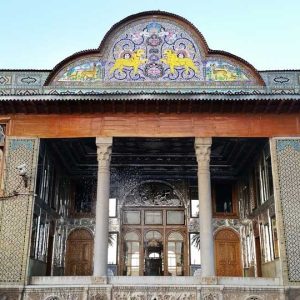
Vakil Mosque in Shiraz
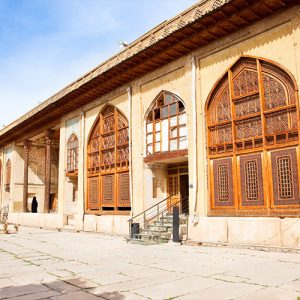
In the western part of the Vakil Bazaar, there is an old and beautiful mosque that was built during the Zand dynasty by Karim Khan Zand. The design of the Vakil Mosque features a two-nave layout, consisting of southern and eastern naves, both of which exhibit stunning architecture.
Given the historical and architectural significance of the structure, this mosque was registered on July 9, 1932, with the registration number in the list of national monuments of Iran.
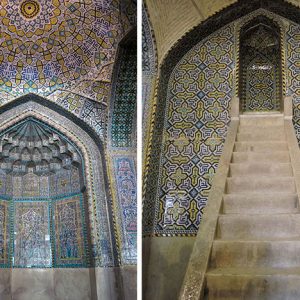
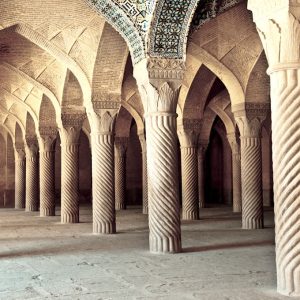
Karim Khan Citadel
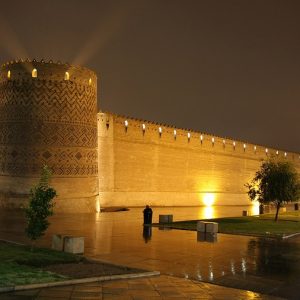
Among the attractions of Shiraz, the Karim Khan Citadel is one of the most famous. This magnificent structure, located in the center of Shiraz, is a remarkable example from the Zandieh era, built by Karim Khan Zand, known as the Wali al-Ra’ya, in the year 1180 of the lunar calendar. This citadel served as the seat of government and residence for Karim Khan, which is why it is known as the Karim Khan Citadel. In 1972, the Karim Khan Citadel was registered in the list of national heritage of Iran.
Vakil Bathhouse in Shiraz
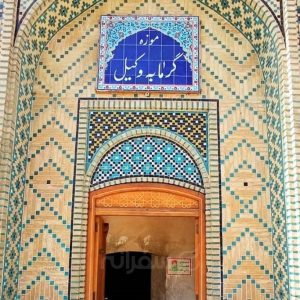
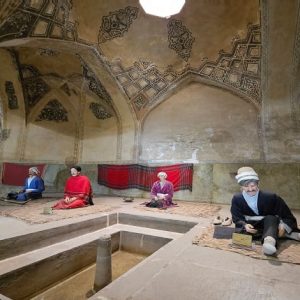
The Vakil Bathhouse is considered one of the attractions of Shiraz, a historical site belonging to the Zand era, and it is listed as number 917 in the national heritage registry of Iran. This bathhouse, which captivates with its unparalleled plasterwork and painting, has now been converted into an ethnological museum. By entering, you can learn more about the customs, clothing, and culture of the ancient people of Shiraz.
In the past, Vakil Bath was not merely a place for washing; it was also used for gatherings and various ceremonies, a topic beautifully revived with the help of interesting sculptures. In addition to viewing numerous sculptures dressed in traditional clothing, you will enjoy listening to pleasant local music in this bath
After Karim Khan Zand came to power, he chose Shiraz as the capital and built various structures in this city, including a mosque, a bazaar, a bath, a cistern, a citadel, a court, a caravanserai, a mint, and more
The Quran Gate of Shiraz
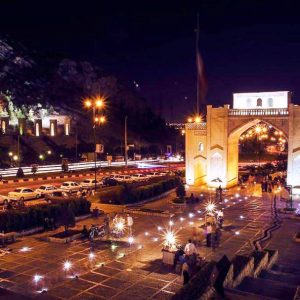
The Quran Gate is one of the ancient gates that remains from past eras in Shiraz, and today it is recognized as one of the tourist attractions of Fars Province. This structure has been repeatedly destroyed and rebuilt over time due to natural disasters and various incidents, always welcoming tourists. The Quran Gate was registered in the national heritage list on December 10, 1996, with registration number 1800. The Quran Gate is located in the northeastern part of Shiraz, in the Allah Akbar Gorge between the Chehel Magham Mountain and Babakoh Mountain, at the exit of Shiraz towards the city of Marvdasht. The Tavusiyeh Square is also nearby.
Mosque of Mushir
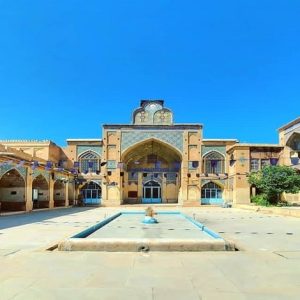
The Mosque of Mushir is one of the most beautiful mosques and attractions in Shiraz, built between 1265 and 1274 AH by “Mirza Abolhassan Khan Mushir al-Mulk.” This historic and notable mosque is located on Qa’ani North Street, in the Armenian Bazaar neighborhood. At the entrance of the prayer hall, there is a high arched niche on which Quranic verses are inscribed in large, beautiful Thuluth script, and above this prayer hall, two minarets adorned with tile work can be seen
0 Comment