
 English
 فارسی
فارسی 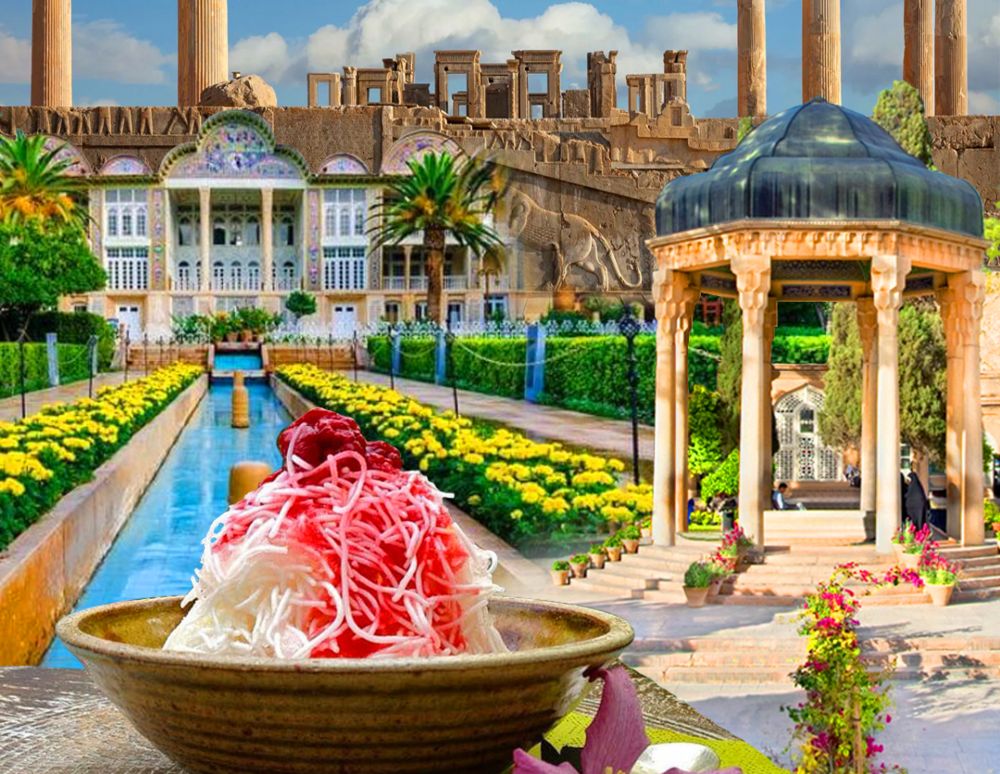

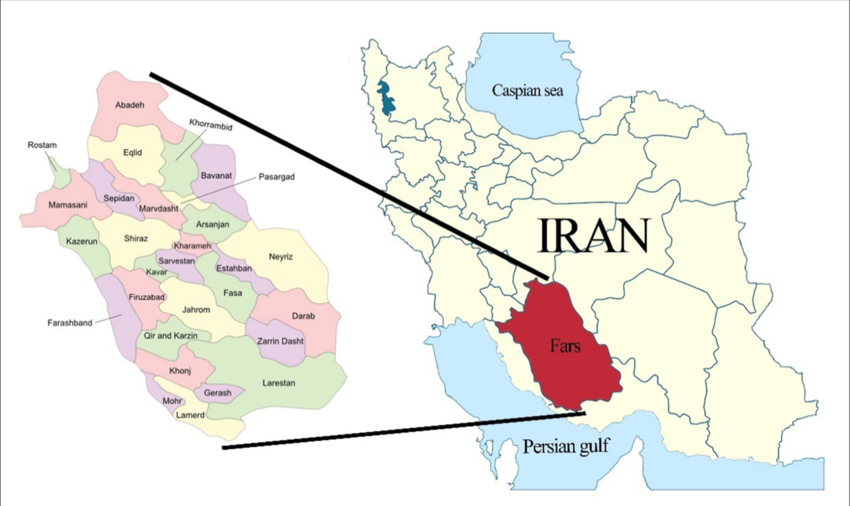
Fars province, with an area of about 122,608 square kilometers, is the fourth largest and fourth most populous province of Iran. The capital of Fars province is Shiraz, which is the most populous city in this province and the sixth most populous city in the country. Among the other populous cities of this province, we can mention the cities of Marvdasht, Jahorm, Kazeroon and Fasa. The official language of the people of Fars province, like the official language of Iran, is Farsi
HISTORY
Fars region is one of the oldest centers of Iranian civilization
In this province, there are many valuable and historical buildings, such as Persepolis, Ardeshir Palace, Firozabad, Shahr Ghor, Bishapur, etc., which are the manifestation of the civilization and historical culture of Iran. Fars province witnessed great empires such as the Sassanids and Achaemenids, and two kings named Cyrus and Ardeshir Babkan ruled it.Follow Zhiva Parvaz for more informasion
Since many dynasties ruled in this province, many historical works have been left from each of them. These works can tell the culture and history of the mentioned periods
SHIRAZ
The city of Shiraz is one of the big cities of Iran, which has been able to introduce its level not only to Iranians but also to the world with its various features and attractions
Shiraz is the capital of Fars province; It has been famous for its beautiful gardens since ancient times. Some of its gardens are of historical importance and are considered significant tourist centers. The Eram Garden, Afif Abad Garden, Delgosha Garden, and Jahan Nama Garden are spectacular among them
MARVDASHT
Marvdasht is a city in the north of Fars province and the center of Marodasht city. This city is located 40 km north of Shiraz metropolis and its climate is mountainous and moderate. This city was chosen as the political and economic capital of the ancient Iranian empire, and it was the site of the construction of magnificent buildings such as Takht Jamshid, Naghse Rostam and Pasargad
Historical, cultural, and natural attractions
Tourist spots such as: Lost Paradise, Droudzan Dam and Kamfiruz region, Chaho Pass, Dry Gorge, Tireh Bagh, Mount Hossein, Mount Bid Sandal, Mount Mehr and the Qaleh Mountains, Dashtak Mountain, the banks of the Koor River, especially in areas near Droudzan, the Excellent Cave of Hajjiabad village, the Hasar Waterfall of Imamzadeh Ishaq (brother of Imam Reza), Sultan-e Wilayat, the tomb of Ayub Nabi, and ….
Historical and Cultural Attractions
Persepolis Complex
Tangeh Bolaghi
Tachara Palace
Pahlavi Inscriptions
Naghsh-e Rustam
Naghsh-e Rajab
Tomb of Artaxerxes II (Achaemenid) and Artaxerxes III (Achaemenid)
Old City of Istakhr
Ghadamgah (Tomb of the Achaemenid Period)
Tall Bakun
Quarries of Persepolis
Ashkft Gavi Cave
Koh-e Ghaleh
Zendan-e Soleiman Tower
Band Amir Bridge
Khan Bridge
Castle of Istakhr (One of the Castles of Hasan Sabbah and 1000 Years Old)
Qasr-e Qalat and Badr Garden in Seydan City
Shah Abbasi Caravanserai in Mahin Village
Imamzadeh Ayyub Nabi
Ancient City of Anshan
Cyrus’s Dam (Achaemenid Period)
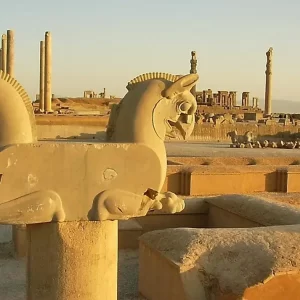
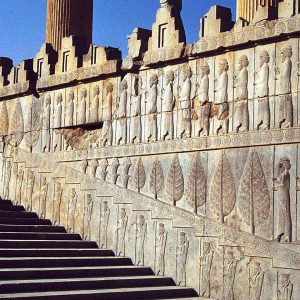
Persepolis
Persepolis, also known as Parseh, Takht-e Jamshid, and the Thousand Columns, is located in the north of the Marvdasht County, about 5 kilometers from the center of the province. This area is one of the ancient regions of Iran, which for many years served as the magnificent and ceremonial capital of the Persian Empire during the Achaemenid dynasty. Persepolis was built during the reigns of Darius the Great, Xerxes, and Artaxerxes I (Achaemenid) and was for a long time a center for holding religious ceremonies and celebrations, especially Nowruz
This site has been a registered UNESCO World Heritage Site in Iran since 1979
Naqsh-e Rustam
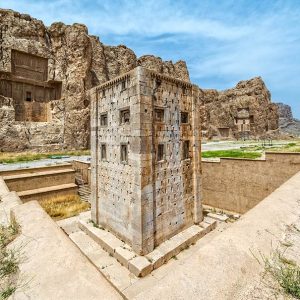
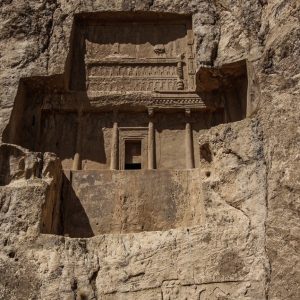
Naqsh-e Rustam is an ancient complex located north of Marvdasht, situated 6 kilometers away from Persepolis. This archaeological site contains remnants from the Elamites and Sassanids and has been of significance from around 1200 BC to 625 AD, as it is the tomb of four Achaemenid kings, along with multiple bas-reliefs depicting important events from the Sassanid era.The Zoroastrian Kaaba and a destroyed bas-relief from the Elamite period are located in this place, and during the Sasanian era, the Naqsh-e Rustam site also held great religious and national significance.
Four rock-cut tombs are carved into the heart of ‘Janpanahsin, which belong to Darius the Great, Xerxes, Artaxerxes I (Achaemenid), and Darius II, all of which possess the same characteristics.Ardashir Babakan was the first to carve a rock relief in this area, depicting his coronation scene from the hands of Ahura Mazda. After him, Sasanian kings carved their coronation scenes or accounts of their battles and honors on the face of the mountain. The fact that Ardashir and his son Shapur I carved reliefs alongside those of their Achaemenid counterparts in Naqsh-e Rostam likely indicates a cultural and political strategy of emulating the past.
Naghsh-e Rajab
Naghsh-e Rajab is a site located 3 kilometers north of Takht-e Jamshid (Persepolis) in Marvdasht, where several rock carvings from the Sasanian era remain. The most famous of these carvings are the inscription of Shapur I and the inscription of Kartir at Naghsh-e Rajab. The attire and arrangement of that period are clearly visible, but the depiction of Ahura Mazda and the faces of the Sasanian kings have been damaged during the Arab invasion
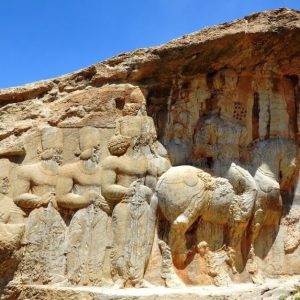
The city of Estakhr
Estakhr was one of the largest cities of its time and, according to historians, had four gates, one of which is now located at the bend of the Marvdasht-Arsanjan road, and another was situated to the south of present-day Marvdasht
Seven kilometers from Persepolis lie the ruins of Estakhr. The remnants of this city include a stone gate, columns, and stone walls dating back to the Achaemenid era and earlier. In this city, remnants of Islamic, Sasanian, and Parthian structures, as well as artifacts from the early Islamic centuries, have been discovered
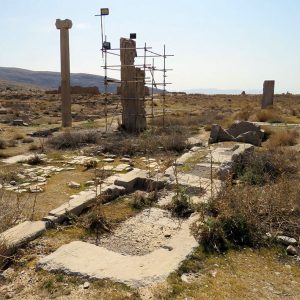
This city was one of the most prosperous and magnificent cities of ancient Iran until the end of the Sasanian dynasty, but it was destroyed by Alexander and later conquered by the Arabs. Due to the continuous uprisings of the people (from the year 23 to the year 29 AH), it was captured multiple times, and its people were massacred. After that, only ruins of it remained.
Jahrom
Jahrom is a city in Fars Province and the center of Jahrom County
Jahrom is one of the historical cities of Iran. The founder and builder of the city of Jahrom is said to be Ardashir I, the son of Xerxes, the fifth king of the Achaemenid Empire. Ferdowsi mentions Jahrom in several instances in the Shahnameh, particularly in the stories related to Ardashir Babakan. There are many historical sites and tourist attractions in Jahrom. The Jahrom Fire Temple, Jahrom Bazaar, Grand Mosque, Khan School, and Stone Carvers Cave are some of the most well-known historical sites in Jahrom
The Stonecutter Cave
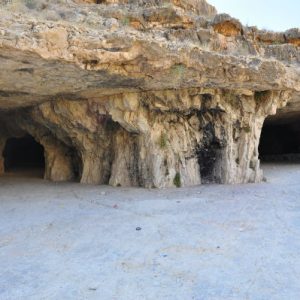
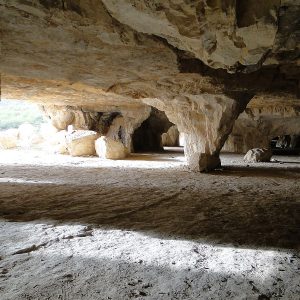
The Stonecutter Cave is a man-made cave in the city of Jahrom, known as the largest man-made cave in the world. This cave is also referred to as the stonebreaker cave, stonecutters, and stone crusher
The stonebreaker cave is a collection of openings and columns that appear as intersecting corridors. These corridors have been formed due to the extraction of white limestone and dolomite, and it is referred to as the largest artificial cave in the world
Qadamgah Jahrom
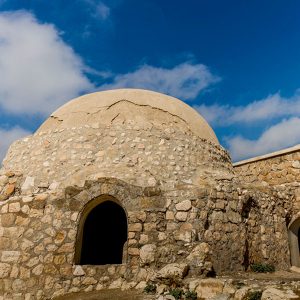
Qadamgah Jahrom or the Fire Temple of Jahrom is a structure located on a hill in the Alborz Mountains, south of the city of Jahrom. This building resembles the prayer halls of a mosque and includes arches facing north next to a water reservoir. It is likely to be a fire temple from the Sassanian era. André Godard considers part of its structure to be from before Islam and part of it to be from after Islam.The entrance of Jahrom was registered in the list of national monuments of Iran on August 1, 2005, under number 1319. In recent years, this building has been restored by the Cultural Heritage and Tourism Organization. A tomb near this building is attributed to Barbad, a renowned musician of the Sasanian era.
Firoozabad
Firoozabad (in Middle Persian: Gur or Ardeshir-khorrā, meaning “the glory of Ardeshir”) is a city located 110 kilometers south of Shiraz and is the center of Firoozabad County. This city is situated 3 kilometers from the ancient site of Gur, which was one of the important cities during the Sasanian era and (early Islam).
Firoozabad County has 107 historical sites, of which 6 are registered as UNESCO World Heritage sites. This point is important to note considering that the total registered UNESCO sites in Iran amount to 24, and out of these, 11 are in Fars Province, including the 6 sites such as the Qaleh Dokhtar, the Mehr Nese Bridge, the Tangab relief, the victory relief of Ardashir, the Ardashir Babakan Palace, and the city of Gur located in Firuzabad
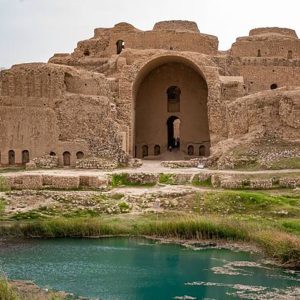
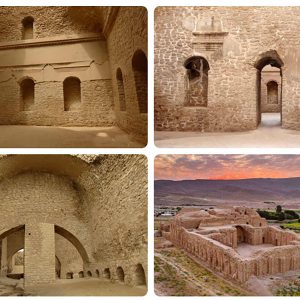
The Palace of Ardeshir Babakan
or the Palace of Ardeshir Papakan, also known as the Fire Temple of Ardeshir, is a fortress located near Firouzabad in Fars province, at the foot of a mountain close to the Qaleh Dokhtar. It was built in 224 AD by the order of Ardeshir Babakan, the founder of the Sassanian Empire. This fortress is situated two kilometers north of the ancient city of Gor. The ancient city in which the palace is located was renamed “Piruz” (Victorious) after Ardeshir established the Sassanian Empire by overthrowing Artabanus, the last king of the Parthian Empire.After the Arab invasion of Iran, the victorious Arabs named the city “Firuz,” and this name remained.
The current city of Firuzabad is historically significant in Iran.
Current situation
The palace of Ardashir Babakan was registered as a UNESCO World Heritage site on June 30, 2018, alongside seven other archaeological sites from the three ancient regions of Firuzabad, Bishapur, and Sarvestan, under the general title of the Sasanian Archaeological Landscape of Fars.In Azar 1399, following the flooding, this palace was at risk of waterlogging, and the palace’s fences were damaged by the flood.
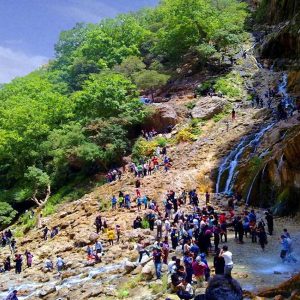
Marghoon Waterfall, with a height of 70 meters and a width of 100 meters, is one of the most magnificent and tallest waterfalls in Iran and is one of the attractions of Sepidan County in Fars province. It is said to be one of the tallest spring waterfalls in the world. This beautiful 70-meter waterfall is located 130 kilometers from Shiraz and 55 kilometers from Sepidan. The water of Marghoon Waterfall is not supplied by any river; it comes from numerous springs.
0 Comment