
 English
 فارسی
فارسی 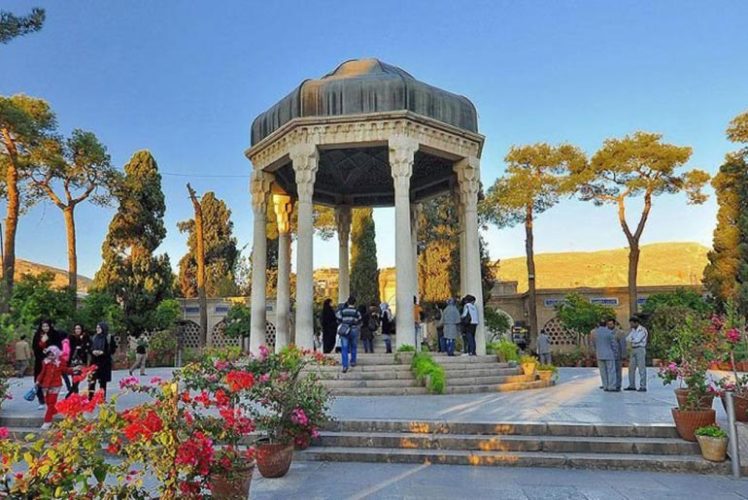

Introduction
Hafezieh, the mausoleum of the renowned Persian poet Khwāja Shams-od-Din Mohammad Hafez Shirazi, is one of the most famous cultural and historical landmarks of Iran, located in the poetic city of Shiraz. This site is not only the resting place of Hafez, but also a symbol of Persian culture, mysticism, classical poetry, and Iranian–Islamic architecture. Hafezieh welcomes thousands of domestic and international visitors each year who come to pay tribute to the poet of love and mysticism and enjoy its beautiful garden atmosphere
Architecture of Hafezieh
The architecture of Hafezieh is a harmonious combination of traditional Iranian design, classical elements, and the aesthetics of the Persian garden
The Tomb Structure
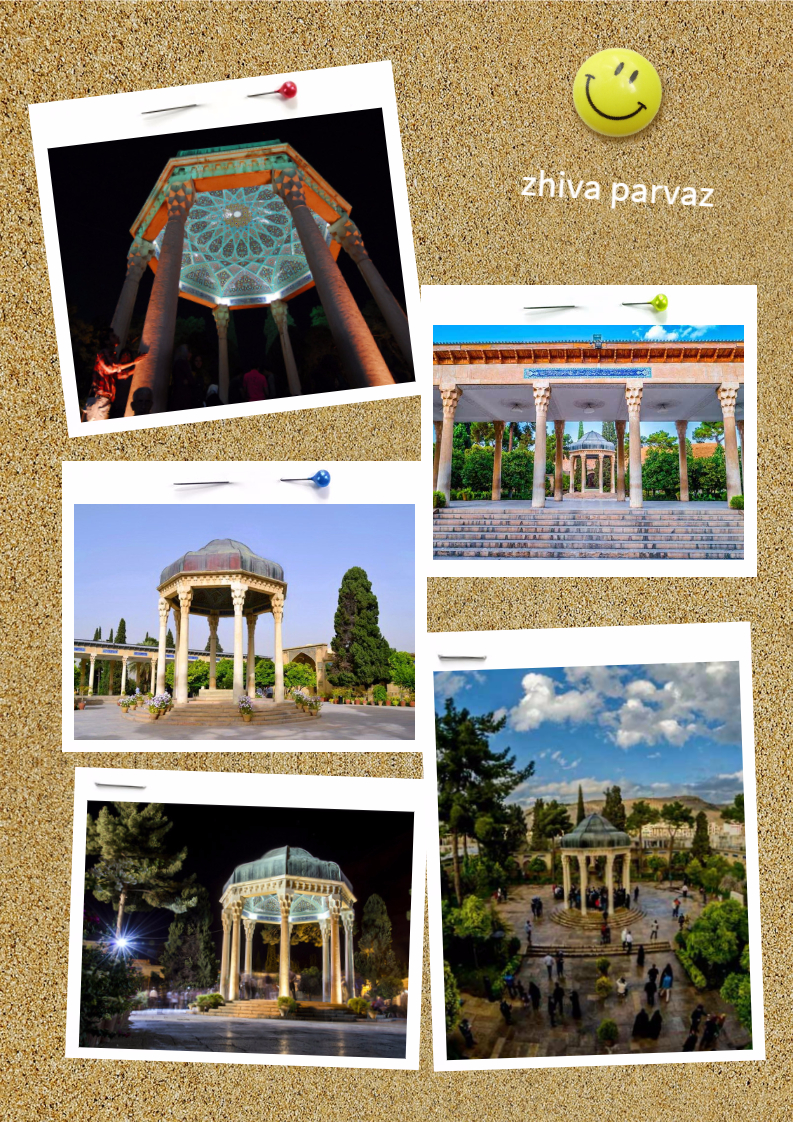
Hafez’s tomb rests under a green copper dome, which stands on tall, elegant stone columns arranged in an octagonal shape. The octagon symbolizes the eight spiritual realms in Persian mystical tradition
The Tombstone
The marble tombstone from the Zand era is inscribed with one of Hafez’s beautiful ghazals. For centuries, this stone has been a place where people gather to take divinations (fall-e Hafez) and seek spiritual comfort
The Portico and Main Courtyard
The entrance of Hafezieh features a large portico with 20 stone columns, which adds grandeur to the complex. This portico connects the northern and southern courtyards
Northern Courtyard: The tomb, garden paths, pools, and greenery
Southern Courtyard: Cultural spaces, bookshops, and areas for ceremonies
Persian Garden Layout
The large rectangular pool, the well-aligned rows of orange trees, lush greenery, and rose gardens recreate the classic atmosphere of Persian gardens, especially those of the Fars region
Cultural Significance of Hafezieh
Hafezieh is more than a historical site; it is a symbol of Persian identity. Iranians use Hafez’s Divan for fortune-telling, meditation, major life decisions, and especially during traditional events such as Yalda Night. Many cultural ceremonies, poetry readings, and annual memorial events for Hafez are held in this place
The Importance of Hafez
Hafez is one of the greatest ghazal poets in world literature, and his poetry has achieved global recognition. Characteristics of his poetry include
Themes of love, mysticism, joy, and wine
Philosophical wit and spiritual subtlety
Exceptional musicality of language
Rich imagery and multilayered meanings
Mystical and philosophical dualities
For these reasons, his mausoleum inspires poets, artists, thinkers, and lovers of Persian culture
Events and Ceremonies at Hafezieh
Hafez Memorial Day (October 12 / 20 Mehr)
Seasonal poetry nights
Traditional music performances
Literary and philosophical gatherings
Visitors commonly sit near the tomb to take Hafez’s omen and reflect on his verses
Location and Accessibility
Hafezieh is located at the beginning of Hafez Street, near Qur’an Gate in northern Shiraz. Its central location makes it easily accessible via public transportation
Conclusion
Hafezieh of Shiraz is not merely a poet’s mausoleum; it is a sanctuary where the Iranian spirit connects with beauty, art, poetry, and mysticism. With its captivating architecture, serene garden atmosphere, and historical significance, it stands as one of Iran’s most important tourist destinations and a timeless symbol of authentic Persian culture. Every traveler to Shiraz describes a visit to Hafezieh as a spiritual and unforgettable experience
Hafez’s horoscope
Hafez’s fortune telling is one of the most famous fortune telling, and it usually comes out right. The noble tomb of this great poet is in Hafeziyeh, Shiraz, and many people visit his tomb to visit his grave
Hafez’s love poems
-
What if I pick a fruit from your garden? What if I see your lamp in front of me? A lover who gives such a night-watching wind?
-
We had help from the friends of the eye
It was wrong what we thought
Who will pluck the tree of friendship
We just went and planted a seed
The conversation was not a dervish ritual
Otherwise we would have had adventures with you
Your eye’s way was a deception of war
We made a mistake and thought it was peace
would be an infidel of love if he did not become a wind-worshipper
Hafez’s tombstone poem
0 Comment