
 English
 فارسی
فارسی 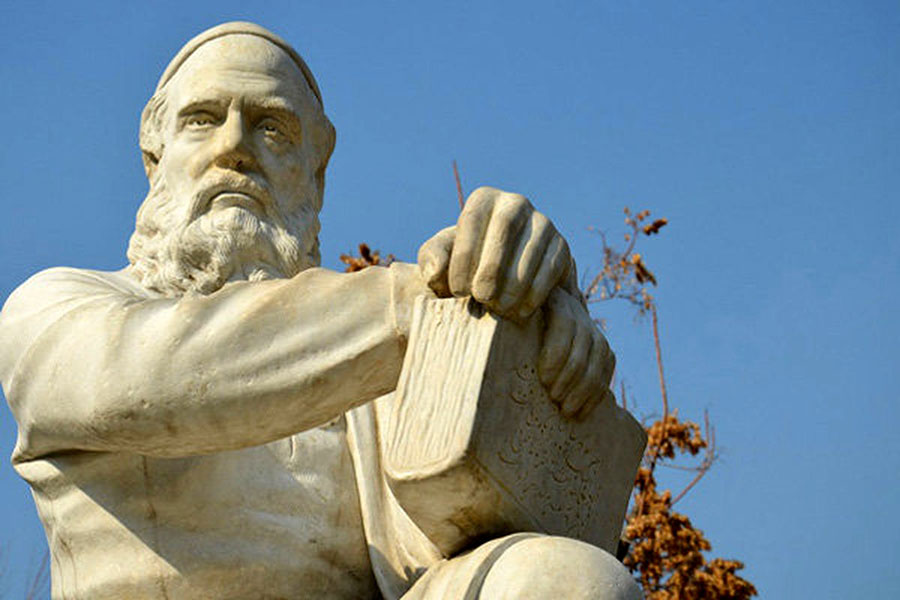

Omar Khayyam Nishapuri (full name: Ghiyath al-Din Abu al-Fatih Omar ibn Ibrahim Khayyam Nishapuri) (440 – 517 AH) who is also known as Khayami, Khayyam Nishapuri, Omar Khayyam, and Khayami al-Nisaburi, was a polymath, philosopher, mathematician, astronomer, and Persian quatrain poet during the Seljuk era. Although Khayyam’s scientific standing is superior to his literary status and he was titled “Hujjat al-Haq,” his fame is owed to his rubaiyat, which has global renown. Khayyam’s quatrains have been translated into most living languages
One of his most prominent works can be considered the organization and supervision of the Iranian calendar calculations during the ministry of Khajeh Nasir al-Din al-Tusi in the reign of Sultan Malik Shah Seljuk (426–490 AH); Khayyam’s calculations in this regard are still valid and have a considerably higher accuracy than the Gregorian calendar. He was a master in mathematics, astronomy, literary, religious, and historical sciences
Omar Khayyam was born in Nishapur in the 5th century AH during the Middle Ages. At that time, Nishapur was the main center of Zoroastrianism, and it is likely that Khayyam’s father was a Zoroastrian who converted to Islam. His full name in Arabic texts is Abu al-Fath Umar ibn Ibrahim al-Khayyam. In Persian, he is usually referred to as Hakim Omar Khayyam
His tomb is currently located in the city of Nishapur, in a garden where the tomb of Imamzadeh Mohruq is situated
0 Comment