
 English
 فارسی
فارسی 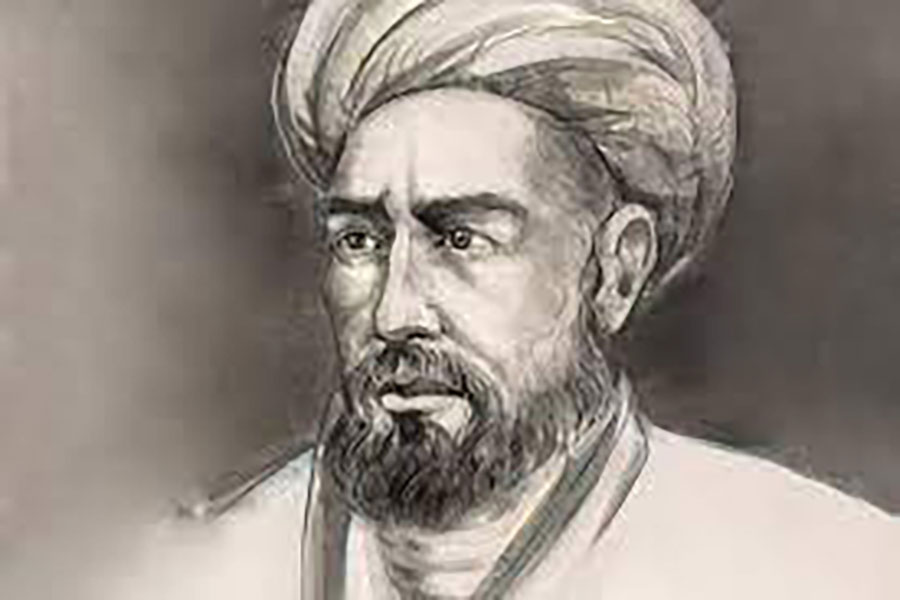

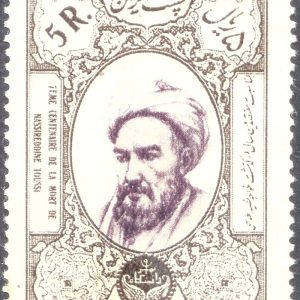
Abu Ja’far Muhammad ibn Muhammad ibn Hasan Tusi (579–672 AH) (1201–1274 AD) was an Iranian poet, polymath, philosopher, theologian, jurist, astronomer, thinker, mathematician, astrologer, physician, mystic, and architect. His nickname was “Abu Ja’far,” and he was known by titles such as “Nasir al-Din,” “Muhakqiq Tusi,” “Ustad al-Bashar,” and “Khajeh.” Ibn Khaldun (1406–1332) regarded him and Fakhr al-Din al-Razi as the greatest scholars of Iran
He studied religious and rational sciences under his father’s supervision and learned logic and natural philosophy from his uncle. He completed his education in Nishapur and gained fame there as a prominent scholar
scientific activities
He revived the Peripatetic philosophy, which had been declining in Iran after Avicenna
He compiled a collection of Shia theological views in the book “Tajrid al-I’tiqad
He built the Maragheh Observatory
He created very precise tables of planetary motion, which were an updated planetary model and critiques of Ptolemaic astronomy
Alongside the Maragheh Observatory, he established a library with about forty thousand books
Triangles were introduced as a branch of mathematics as a science
By nurturing students such as Qotb al-Din Shirazi and gathering Iranian scholars, he became a key factor in the transmission of Iranian civilization and knowledge before the Mongols to future generations
There is evidence that suggests he influenced Copernicus’s heliocentric theory
A 60-kilometer volcanic crater in the southern hemisphere of the Moon has been named after Khwaja Nasir al-Din al-Tusi. A minor planet discovered by the Russian astronomer Nikolai Stefanovich Chernykh in 1979 is also named after him. Khaja Nasir al-Din al-Tusi University in Tehran, the Tabriz Observatory, and the Shamakhi Observatory in Azerbaijan have also been named in his honor
In 2013, the Google search engine, on the occasion of the 812th anniversary of the birth of Khwaja Nasir al-Din al-Tusi, posted an image of him on its website that was accessible in Arab countries. According to the BBC, this photo emphasized the Iranian heritage of this scholar, which provoked reactions in Arab countries
In Iran, the 5th of Esfand, the anniversary of Khaj Nasir al-Din al-Tusi’s birth, has been designated as Engineering Day
Triangles
In the book “Shape of the Sector,” triangles are introduced for the first time as an independent science, and it is presented in the preface of astronomy, outlining the fundamental laws for solving planar and spherical triangles
Physics
In the book “Tajrid al-Kalam,” he discusses light and presents ideas based on the particle theory that are of extraordinary importance
In the book “Al-Basair,” written by Euclid, he compares the propagation of sound to water waves and elaborates on it
He has come up with a new method for using the sundial for observation, which is valuable in the field of astronomy
Astronomy
Khwaja Nasir al-Din al-Tusi compiled the “Zij Ilkhani” based on the observations made at the Maragheh Observatory. The Zij Ilkhani has held special significance for centuries in many regions of that time, including China, and was translated and published in Europe in 1356 AD. The oldest copy of this Zij is kept in the National Library of Paris
Date of death
His date of death is the 18th of Dhul-Qi’dah in the year 673 AH; he was buried in the shrine of Kadhimayn, at the feet of two Imams. According to his will, this verse from Surah Al-Kahf was inscribed on his gravestone: “And their dog was stretching its forelegs at the entrance (of the cave).

0 Comment