
 English
 فارسی
فارسی 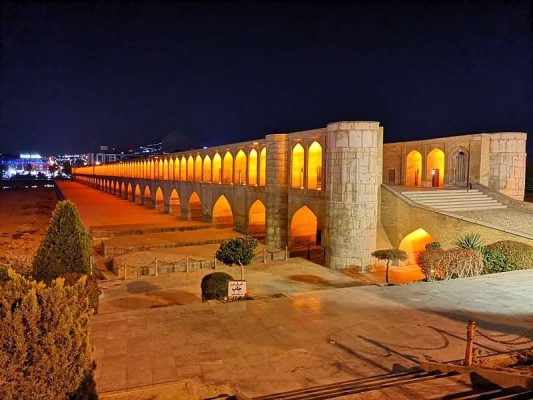

- In 1008 AH, the twelfth year of the reign of Shah Abbas I Safavi, the Shah himself ordered the construction of this structure. The construction took three years and finally in 1011 AH, under the supervision of Allahverdi Khan, the wise general and trusted person of Shah Abbas Safavi, who had Georgian ancestry, the construction of the Si-Se Bridge was completed.
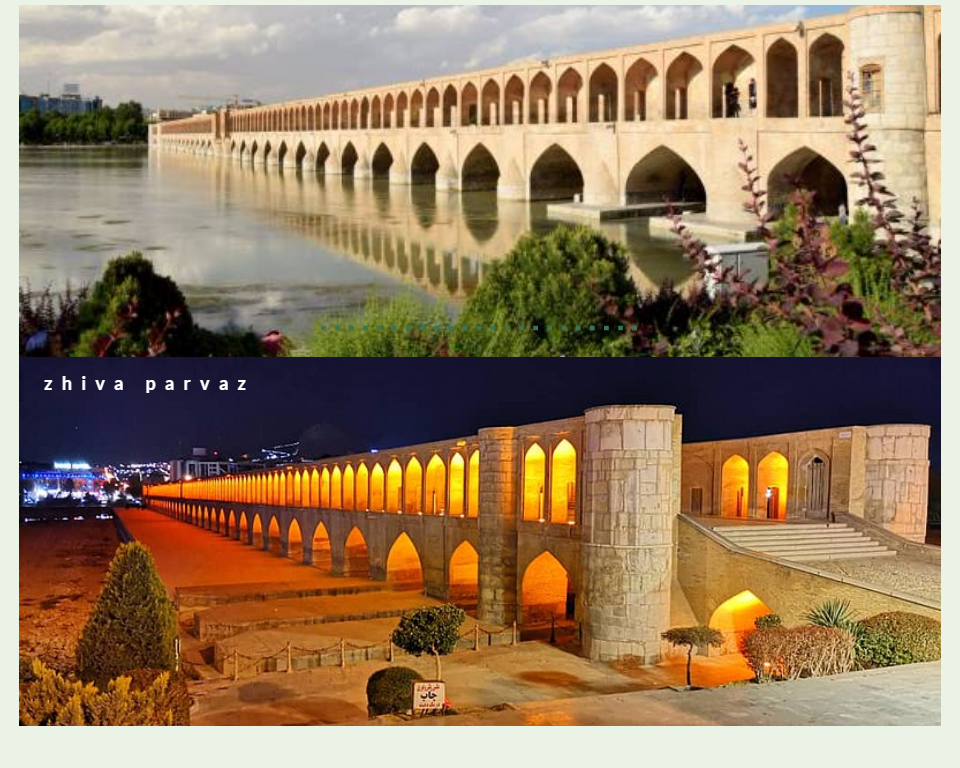
- Si-O-Se Bridge (33 Bridge or Allahverdi Khan Bridge) is a two-story stone arch bridge of approximately 300 meters. Si-Se Bridge is the most famous bridge in Isfahan due to its size, central location, and outstanding architecture.
- The architect of Si-O-Se Bridge of Isfahan was Ostad Hossein Bana Isfahani, the man whose son built the Sheikh Lotfollah Mosque. An important point that distinguishes this bridge from other bridges is that most bridges are built in the narrow part of the river. However, Si-Se Bridge of Isfahan was built in the wide part of the river. The reason for this choice was the beautiful view and vast landscape of the Zayandeh-Rood River and its shallow and calm bed
- During the formation and development of Isfahan, the Thirty-Three Bridge was one of the main communication axes in the city, connecting the Abbasi Four Gardens to the Upper Four Gardens and the Jolfa neighborhood.
- As its name suggests, the Thirty-Three Bridge has 33 spans and main columns. Other names for this bridge include “Jolfa Bridge” and “Abbasi Bridge”.
- The Thirty-Three Bridge is the longest bridge in Isfahan and the largest structure on water in Iran, with a total length of 297 meters and a width of 1,375 meters. This bridge is one of the masterpieces of bridge construction in Iran and the world.
- The niches formed by the arches are great for sitting and chatting while enjoying the city view.
- To book Isfahan tours, visit the Zhiva Parvaz tours section and create the most beautiful moments for yourself with Zhiva Parvaz
0 Comment