
 English
 فارسی
فارسی 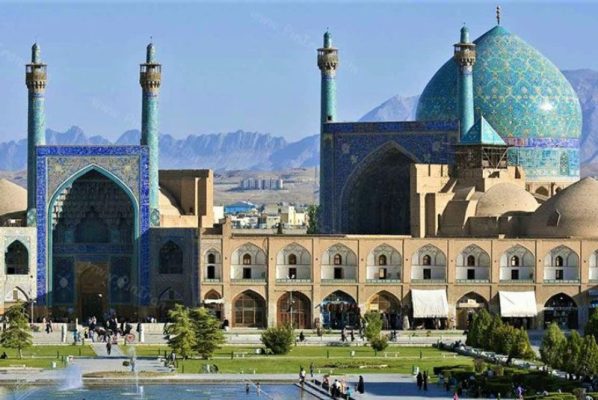

- Imam Mosque or Shah Mosque, also known as the New Abbasid Mosque or the Royal Mosque, is a mosque in Isfahan, Iran. It is located on the southern side of Naqsh-e Jahan Square. This building was built during the Safavid Dynasty by order of Shah Abbas I of Iran. After the Iranian Revolution, it became known as Imam Mosque.
- This mosque is located on the southern side of Naqsh-e Jahan Square and its construction began in the 17th century by order of Shah Abbas and was completed during the reign of his successors
- One of the special features of this mosque is its dome. This dome was designed about 400 years ago in such a way that even the slightest sound is reflected with high clarity and intensity below and near its center. This feature of the mosque dome was used a lot in the past due to the lack of sound devices and … for calling to prayer and speeches. The dome of the mosque is in the form of 2 shells. The height of the great dome of the mosque is 52 meters and its diameter is 23.5 meters, the height of the inner minarets is 48 meters, and the height of the entrance of the minarets of the mosque from the side of Naqsh-e Jahan Square is 40 meters.
- The axis of the mosque is not equal to the axis of the main square. The axis of the square is parallel to the 4 cardinal directions. The entrance of the mosque is aligned with the top of the square, while its inner part is turned 45 degrees to the southwest to correct the direction of the Qibla. To eliminate the inconsistency of these two axes, the designers of the mosque have placed a diagonal vestibule between its entrance and the northern porch, which does not affect the viewer’s conscious awareness when the axis of the mosque rotates after entering the building, and the person entering the mosque finds himself facing the Qiblah without noticing his 45-degree rotation.
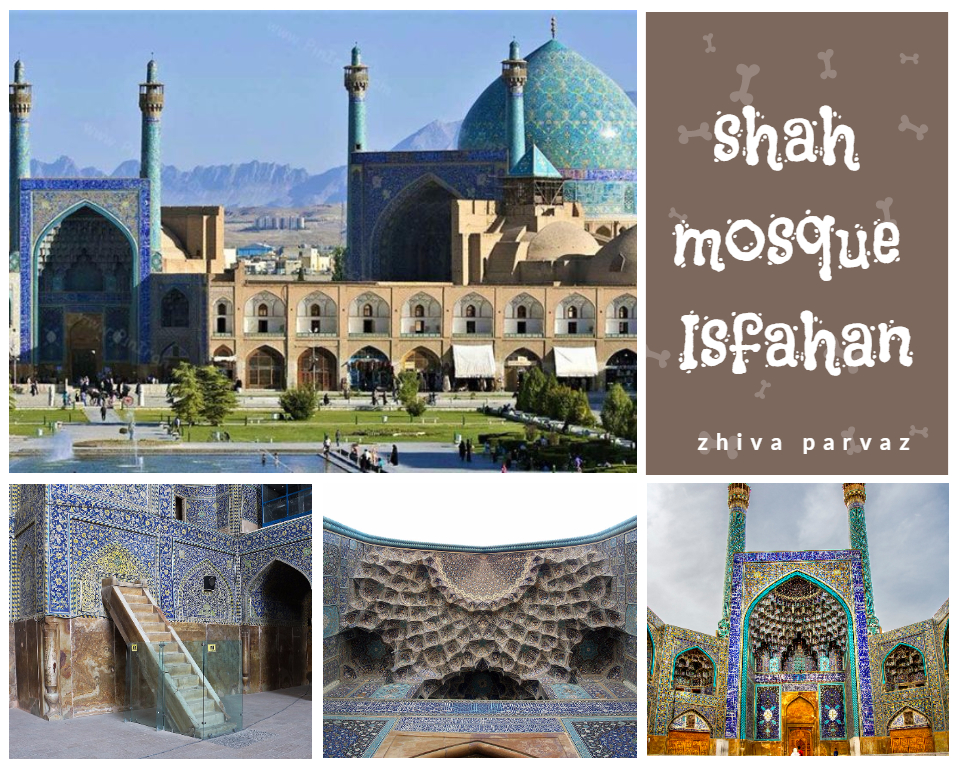
- A major part of the splendor and beauty of the Imam Mosque of Isfahan is the result of its tile decorations, which include all visible external surfaces and all internal surfaces above the marble plinths. The masterpiece of the mosque’s tile work is evident at the entrance door. Various Islamic designs and inscriptions with exquisite mosaic tiles cover the entrance facade.
- Many tourists are unaware of the existence of two seminaries on both sides of the main nave. These schools, known as the Sulaymaniyah School (in the west) and the Nasiriyah School (in the east), had cozy courtyards and rooms for the study of religious sciences. This feature shows that the Imam Mosque was not only a place of worship, but also a comprehensive scientific, cultural and social center in the Safavid capital.
- In the courtyard of the Sulaymaniyah School (west side of the mosque), there is a simple vertical indicator or stone, which is actually a sundial. This scientific indicator, designed by Sheikh Baha’i, a great scientist of the Safavid era, determined the religious noon for Isfahan in all seasons of the year. The presence of this scientific element in the heart of a religious-artistic building indicates the deep connection of science, religion and art in Iranian-Islamic civilization.
- The exquisite marble columns and one-piece marble stones are other notable points of the mosque. There are 7 sundials in the Imam Mosque. Sangab is a very large stone container that was placed in mosques and imamzades in the past and filled with water, which people could use for drinking and performing ablution. Due to the need, Sangab was also used in public places.
Shabestan is a place with a roof and columns of the same shape that existed in mosques for resting and praying. This mosque has two Shabestan, one on the eastern side and the other on the western side of the courtyard. The eastern Shabestan is larger and very simple and without special decorations. However, the western Shabestan is smaller with beautiful decorations and seven-colored tiles and has a very beautiful altar, which can be said to be one of the most beautiful altars in Isfahan mosques. - In 1979, Imam Mosque, along with Naqsh-e Jahan Square, was registered on the UNESCO World Heritage List.
-
Today, this mosque is one of the most important cultural tourism attractions in Iran and the world.
Imam Mosque of Isfahan is a unique combination of faith, art, architecture and politics. This building is not only one of the most important works of the Safavid era, but also one of the most complete examples of Islamic architecture in the world and continues to inspire architects, artists and researchers. - To see Isfahan and its spectacular attractions, stay with Zhiva Parvaz Agency so that we can bring you the best experiences. To book a tour to Isfahan, please visit the tours section of the site.
0 Comment