
 English
 فارسی
فارسی 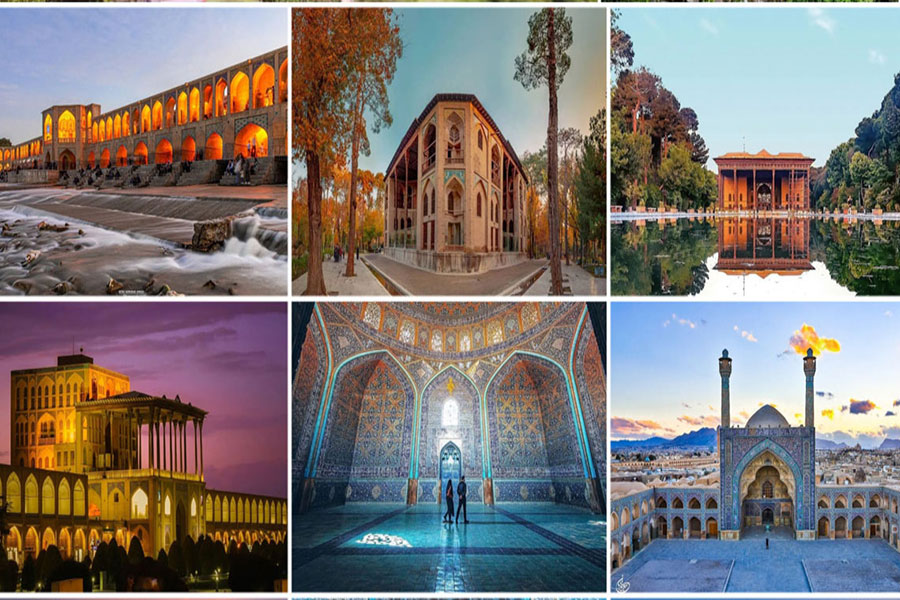


Isfahan province, with its rich history and culture, is considered one of the important tourist destinations in Iran. This province is famous not only for the historic city of Isfahan, which is recognized as one of the most beautiful cities in the world, but also for its diverse counties and natural and historical attractions. The city of Kashan, with its beautiful gardens and historical houses, Natanz with its religious and historical sites, Khansar with its pristine nature and pleasant climate, Semirom with its mountainous landscapes, Varzaneh with its beautiful desert, Khor and Biabanak with their striking desert and unique historical texture are among the remarkable attractions of this province
Now in this article, we will examine the city of Isfahan and other cities in this province
The city of Isfahan is one of the historical and beautiful cities located on the banks of the Zayandeh River, which has earned the nickname “Half of the World” due to its unique works masterpieces of art and history
Among the unique attractions of this city, one can mention Naqsh-e Jahan Square, which itself is a combination of four masterpieces from the Safavid era. This square includes Sheikh Lotfallah Mosque, the Abbasi Grand Mosque, Ali Qapu Palace, and the Qeysariyeh Bazaar
Additionally, among the magnificent works of this city, one can name the Hasht Behesht Palace, the Minarets of Jonban, the Chahar Bagh walkway, the Chehel Sotoun Palace, the Armenian Vank Church, and the famous bridges such as Khajo Bridge, Si-o-se Pol, and so on

Naqsh-e Jahan Square
Naqsh-e Jahan Square, also known as Naqsh-e Jahan Square, Shah Square, Imam Square, the main square, and the royal or grand square, has had several names. Before the Safavid era, there was a garden called Naqsh-e Jahan in the location of the square, which was later expanded during the reign of Shah Abbas II. The square is over 500 meters long and 160 meters wide. In 1934, it was listed as a national heritage site in Iran, and in 1979, it became one of the first Iranian sites to be registered with UNESCO.The initial foundation of the present-day square was established in the year 1011 AH, and gradually, the construction of the square and its buildings was completed by the year 1025
Ali Qapu Palace

This building is located on the western side of Naqsh-e Jahan Square, with a foundation area of approximately 1800 square meters and 6 floors. This palace contains 53 rooms that were designed for resting, holding government meetings, and hosting ambassadors and guests. One of the attractions of this site is the sixth floor, which features a music hall, and the plasterwork shapes captivate the eyes of every viewer


This mosque, with its unique architecture and extraordinary decorations, is considered one of the largest mosques in Iran. Its vast courtyard and tall minarets provide a stunning view of Naqsh-e Jahan Square
.This structure is located on the southern side of the square and was registered as one of Iran’s national heritage sites in 1931

The entrance to the Qeysariyeh Bazaar is located on the northern side of Naqsh-e Jahan Square and serves as the gateway to the traditional market. The third floor of this market used to be a drum house, and part of this section was destroyed during the Qajar era. On the entrance to the Qeysariyeh, there are brick decorations depicting scenes of Shah Abbas in battle with the Uzbeks, as well as images of European men and women, and a half-human, half-tiger or lion figure with a dragon’s tail.

This palace actually has 20 columns, which is why it is known as having 40 columns due to the reflection of the 20 columns in the water. This palace was partly used for holding celebrations and hosting guests of the court. The building features a mirror hall, an 18-column hall, and two rooms located to the north and south of it. This garden and palace were registered as a national
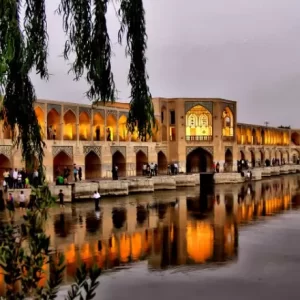
This bridge is located over the Zayandeh River, east of the Si-o-se Pol. Other names for this bridge include Shah Bridge, Baba Rokn al-Din Bridge, and Hassan Beig Bridge or Shiraz Bridge. It is one of the structures from the era of Shah Abbas II, built in the year 1060 AH. In the middle of this bridge, a building was constructed for the temporary residence of the Safavid king and his family. One of the beauties of this bridge is that it uses colorful tiles, and this bridge was blocked by wooden beams acting as a dam to hold back the river

The unique feature is that if one of its minarets is moved, the other minaret also moves simultaneously without any contact
The architecture of the Tower of Silence features beautiful tile work, artistic plasterwork, and attractive paintings that reflect the rich art and culture of Iran in its time. This structure is not only a tourist attraction for visitors but also a symbol of Iranian architectural skills


0 Comment